


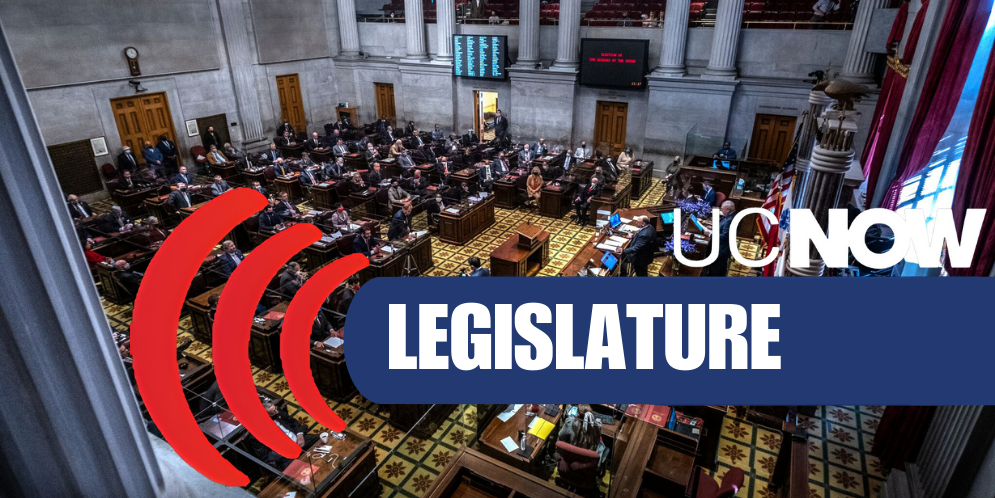
Local lawmakers returning to Nashville this week for a special session to redraw all nine of the state’s congressional districts.
That follows a Supreme Court ruling regarding district balance and the Voting Rights Act. State Representative Michael Hale said the timing of the session creates difficulties for candidates who have already invested significant resources into their current election cycles.
“We’re right here in the middle of an election,” Hale said. “We’ve got a lot of people that have spent thousands of dollars running a campaign for the last year and then now when we change Memphis, we change Tennessee and there’s gonna be people that’s gonna have to make some changes in their campaigns and here they are facing an August primary, and so there’s some unfairness to that.”
State Representative Ed Butler said the primary focus of the assembly involves reviewing West Tennessee districts to ensure the maps meet legal requirements. Butler said the legislative process will move through committees before a final House floor vote expected Thursday.
“Well, I’m not excited about going back at all. But, you know, the governor called us into session and that’s what we were elected to do is to go represent our districts in Nashville, and so I’m gonna go,” Butler said.
Butler said the state must establish a new filing period for candidates because redrawn maps may move individuals out of the districts where they originally filed. Butler said the updated schedule is designed to accommodate existing deadlines for the March primary and the November general election.
“I they’re gonna have to allocate, if if they are redistricted, then they’ll have to allocate a period of time for candidates to file to run in those districts because it may change some of the candidates that are registered now or filed now, I should say, may or may not be able to run in the district they had filed in before because it it may change. They may be mapped out of it,” Butler said.
Hale said changes made to districts in Memphis will create a domino effect that impacts every district across the state from West Tennessee to Mountain City.
Hale said the General Assembly holds the responsibility to redraw House, Senate, and congressional lines every 10 years following the census. Hale said the redistricting process will result in additional expenses for the Secretary of State and local election commissions.
“I wish we would remove the politics from it and like I said, if there’s a constitutional issue here, then we address that,” Hale said. “But the downside of that is, you affect every district in the state of Tennessee because to make that work in Memphis, then you’ve got to make it work in East Tennessee, Middle Tennessee.”
Butler said the expenses for the special session are already accounted for in the state budget because the legislature typically operates under the maximum number of allotted session days. Butler said the session will follow a special set of rules including the formation of special committees announced on the House floor.
“It’s obviously I think politically driven, but if you look at some of the Democrat states that are predominantly Democrat especially in the northeast, you see those with 40 to 45 percent Republicans and they’re all Democrat congressional districts,” Butler said. “So I think it’s probably politically driven. But you’ve seen the other states on the other side of the coin do the same thing.”
Hale said the 6th Congressional district is currently an open seat where candidates may find themselves suddenly representing different counties than those they have campaigned in for the past year. Hale said the focus of the special session should remain on the seven million people who call Tennessee home rather than political control.
“This should not be about power,” Hale said. “This should not be about control, but it should be about people. And it should be about the Constitution. So if that’s an issue, let’s lay aside the power, let’s lay aside those things and let’s do the right thing for the people of Tennessee.”
Hale said he intends to prioritize the shared values of rural Tennessee while fulfilling his oath to uphold the state and federal constitutions.